Podcaster

Episoden

05.10.2020
1 Stunde 50 Minuten
In this talk we met with Christine and Lisa to discuss and share
some trauma-informed and body-oriented nervous system resources
during the COVID 19 pandemic. This talk was recorded during the
beginning of the pandemic in April, but still feels pertinent in
it’s launch on air in October.
Some of the topics covered:
- The importance of orienting towards resources during
challenging times.
- From hyper-productivity to stop, and how much that reveals our
cultural rushing.
- Sheltering at home as a holding container.
- Seeing how society is revealing where people are in terms of
nervous system states: fight, flight, freeze and appease.
- The raising of responses to these events: conspiracy theories,
feelings of being at loss, overwhelm, not knowing how to deal
with this “invisible” emergency.
- What is it to function in a world that doesn’t support a
healthy nervous system? The body is having a “neuroceptive”
response and the way back to regulation is in the body.
- Polyvagal Theory and the difference in the state adaptations
across cultures.
- Epigenetics, Family Systems and Stress. Stress, trauma and the
body, Saj Razvi YouTube video.
- Mobilization before safety and connection. What are we adapting
to in the environment? I’m not messed up, I have a nervous
system.
- The loss of pleasure during trauma, allowing tuning into
savoring and directing the attention back to pleasure sensations.
The Hakomi Method and self-soothing gestures to bring more
awareness of pleasure.
- Ways in which people attempt self-regulation and functionality
via external resources that are substitute forms of resources
that are destructive. The concept of “vitality” as a resource
that arises from within vs resources that are external.
Relational and Body-Centered Practices for Healing Trauma:
Lifting the Burdens of the Past 1st Edition, by Sharon
Stanley
- The Threshold Theory of Change, by Lisa Elliot. The
reductionist idea of our culture, in terms of finding the
reductionist “one” solution. Accessing greater health from a
social justice response.
- The midbrain, effort and control area.
- Orienting to the small moments of safety, regulation and
pleasure. The small steps towards pleasure and regulation. One
step at the time, one dish at the time, one breath at the time.
- Tracking and getting to know your own system. What’s your
vitality enjoy?
- Orienting to safety and threat through vision. Doing a task
until completion, and avoiding chronic stress. The concept of
simultaneous visual awareness via panoramic vision. Z-Health
Neurofundamentals free of charge
Other Resources:
- Finding the gravel at the bottom of the river to stop being
swept away.
- Parts of the self, a part of you experiencing something, and me
as the observer and care taker of this part. Turning kindness and
compassion towards ourselves. My body and mind have done so much
to keep me safe. Understanding the intelligence of the nervous
system responses.
- Start small, build up from there. Locate one part of your body
that feels ok.
- Using a therapy ball or lacrosse ball to map (feel) places of
the body that feel pleasant, using language that feels inviting.
- Accumulate those things you have access to; postive self
regulating inputs, like a basket of resources with written
things, objects. Ekeko god (Peru-Bolivia) as an example.
- The crucial role of compassion in this connection with
resources. Turning attention with compasion.
CHRISTINE WUSHKE
Christine Wushke is a long time Yoga Teacher,
Meditation Instructor, Myofascial Release Therapist, and
Certified Hakomi Practitioner, Christine decided to merge her
specialties, she began to incorporate the principles of
Myofascial Release, trauma awareness and mindfulness into all her
yoga classes and, noticing the amazing results and effectiveness,
she designed her own system of Myofascial Yoga.
Christine Wushke is also the author of Freedom is Your Nature: A
Practical Guide to Transformation and creator of the “Easy Yoga
for Beginners” DVD. For more information of Christine
please check out her website at freelyhuman.com
Lisa Elliott comes to this conversation as the
founder of the Vagus Study Group, a large, online collaborative
learning project with a mission of exploring the embodiment of
experience via diverse ways of knowing. Her work and that
of the study group navigates between the methods of western
science, philosophy, activism, art, and the transformative
interconnectedness found in many spiritual orientations.
Lisa is a counselor-in-training at Antioch University Seattle,
completing a rich internship with Dr. Sharon Stanley of Somatic
Transformation before beginning private practice in December of
2020.
Lisa comes to counseling as a returning student from earlier
careers in photography, community organizing, arts non-profit
management, construction project management, and aerial
acrobatics performance and coaching. Her work with her own
life-long chronic illness has led to a holistic and eco-systemic
philosophy of healing and personal growth, and to a deep study of
our embodiment of stress, trauma, and factors of resilience.
Email us your reflections, comments and questions at
embodimenttime@gmail.com
Mehr

12.03.2020
1 Stunde 25 Minuten
In this talk, Kaila June begins sharing her story, how she grew
up in her mom’s dance studio and how much influence that
environment had in her life and career choices. She talks about
her experience traveling with “La Caravana Arcoiris para la Paz”
through South America, we talk about folklore dances and their
relevance.. She shares her explorations of trauma via dance and
art and how movement and embodiment affect the way we learn,
behave, our memory, the intergenerational effects, etc. She goes
through her bio revealing the progression that brought her
towards developing the Somakinese School. We talked about the
skills of teaching and the difference, nuances, pros and cons of
structure vs organic sessions, of being externally oriented vs
being internally oriented and of safety and threat in movement
experiences.
Kaila June, MS, is the founder of SomaKinese School, a virtual
platform for movement teachers offering educational programs
inspired by embodied movement science. As a dance-artist,
Registered Somatic Movement Educator, and Corrective Exercise
Specialist, she has dedicated her life to helping people move and
feel better. Drawing from somatic movement education and weaving
research from the fields of biotensegrity, neuroscience, and the
healing arts, Kaila is totally vested in the art and science of
movement education as a vehicle for planetary change.
Kaila in social media: Facebook, Instagram
Her website: Kailajune.com
Email us your reflections, comments and questions at:
embodimenttime@gmail.com
Mehr

12.12.2019
2 Stunden 1 Minute
In this talk, Matthew Remski and I discuss many of the
multilayered abuse issues in the modern postural yoga scene, as
well as in other high demand groups that he covers in his book
“Practice and All Is Coming”. We talk about the inheritance of
intergenerational trauma, trauma bonding, corporal punishment,
somatic dominance, and the slippery subject of cult dinamics that
leads to disorganized attachment, dissociation and to physical
and sexual abuse. We spend some time at the end looking at some
sulutions to all these problems, like the model of PRISM, and
concepts like personal agency, scope of practice, and the current
conversation about licensing and regulating Yoga.
Trigger warning: this conversation covers many uncomfortable
discussions about abuse.
Matthew Remski is an author, teacher, ayurvedic consultant and
cultural critic. He has published 10 books, including “Practice
and All Is Coming. Abuse, Cult Dynamics, and Healing in Yoga and
Beyond”, that includes all of the topics we cover in this talk.
Matthew is currently working in a new book and is launching an
online series webinar called “6 Critical Problems in Modern Yoga
and how to Work with Them”.
Matthew in social media: Facebook
The meme that started this talk can be found here in Instagram
and Facebook
Episode WEBPAGE
Email us your reflections, comments and questions at:
embodimenttime@gmail.com
Mehr

19.11.2019
1 Stunde 32 Minuten
In this talk, Mark talks about the failures of the modern
postural yoga and how he used the opportunity to turn criticism
into action by creating the Embodied Yoga
Principles. We talked about guru abuse, cultural
differences, trauma, and how these themes can be explored via
multidisciplinary somatic practices. We talk about the issue of
living in a visual culture, in terms of pursuing posture as the
end goal, about relationships in terms of attachment, Mark shares
his approach in the Embodied Facilitator Course,
expanding the skills set and also we discuss the subject of
technology, social media and the pros and contras of using it. We
end our talk with Marc guiding us into a very grounding somatic
practice.
Mark is an embodiment specialist, the creator and host of the
Embodiment Podcast, the director and co-lead
trainer of the Embodied Facilitator
Course, the Embodied Yoga
Principles and the Embodiment
Conference. He has been working extensively in
connecting the dots across diverse fields like martial arts,
yoga, coaching and somatics. His background is in Psychology,
Aikido, Yoga, Embodied Leadership, linguistic coaching,
non-violent communication, mindfulness, etc. He has taught
embodied work in 30+ countries and has experience in
peace-building in numerous areas of conflict from Afghanistan to
Ukraine. Marc also has a new book coming out: Embodiment,
Moving Beyond Mindfulness.
Mark in social media: Facebook, Instagram
Episode WEBPAGE
The guru abuse post I mentioned in the talk can be found here in
Instagram
Email us with your reflections, comments or questions at:
embodimenttime@gmail.com
Mehr

28.09.2019
1 Stunde 16 Minuten
In this talk, Abby takes us in the fascinating evolution of her
personal movement journey, from external and structured, towards
her current approach. In the telling of her own story and how she
went through Personal Training, Ashtanga Yoga, Body Competitions,
Kettlebell Competition, MovNat and Nutritious Movement, the
integration of all the pieces of her Sustainable Movement
approach start to build up and make a clear picture.
We talked about the way kids move vs the structured movement of
the gym, about the obsession with the series in the Ashtanga
practice, about Body and KB Competitions and how having an
external goal can affect us, and we also talked about MovNat and
the work of Katy Bowman and how they deeply influenced the
development of her Sustainable Movement Business. She also talked
about autism and other sensory processing issues and the
importance of developing spaces that are accessible for this
population’s abilities.
Abby is a Nutritious Movement Certified Restorative Exercise
Specialist, NASM certified personal trainer, natural movement
expert, kettlebell expert, registered yoga teacher, and a
Certified Pre & Postnatal Coach with 13 years of coaching
experience.
You can find more information about Abby at:
www.sustainable-movement.com
She is also in Instagram as:
www.instagram.com/sustainable.movement/
Other links relevant to the talk:
MovNat: https://www.movnat.com/
Katy Bowman: https://www.nutritiousmovement.com/
Mehr
Über diesen Podcast
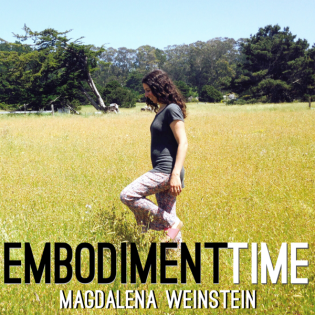
Embodiment Time is a podcast hosted by Magdalena Weinstein, and
dedicated to the evolution of yoga, movement and somatic practices,
interviewing a wide variety of contemporary yoga teachers, movement
specialists, brain based trainers, coaches and other educators of
embodiment practices like Yoga Nidra, Somatic Experiencing and Body
work. The time for embodiment is now.
Abonnenten

Graz


Kommentare (0)